
Personalized, Real-Time English Lessons
B2C | Web Platform
Client: BeLingual | London, UK
Industry: EdTech
Role: UX/UI Design
Year: 2025
Overview
Unifying fragmented workflows to scale interactive learning
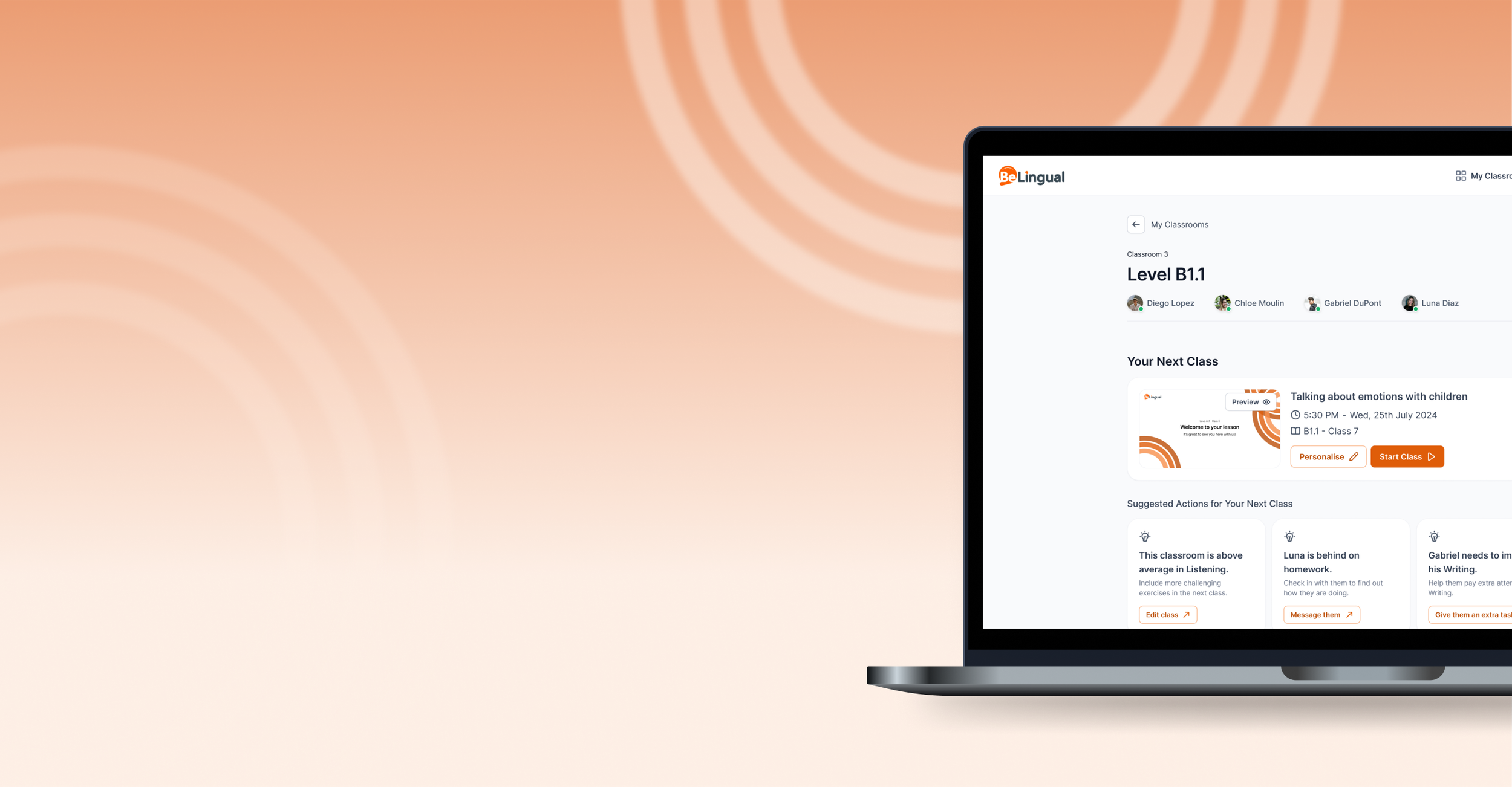
BeLingual (formerly Learn to Learn) is an education company blending English learning with communication, soft skills, and multicultural awareness. However, existing digital tools no longer support its interactive teaching approach, actively limiting student engagement.
The goal was to design a custom, scalable platform for both teachers and students. It needed to enable real-time student submissions and seamless progress tracking without the friction of scattered apps.
The Problem
User Research
Uncovering friction points in the digital classroom
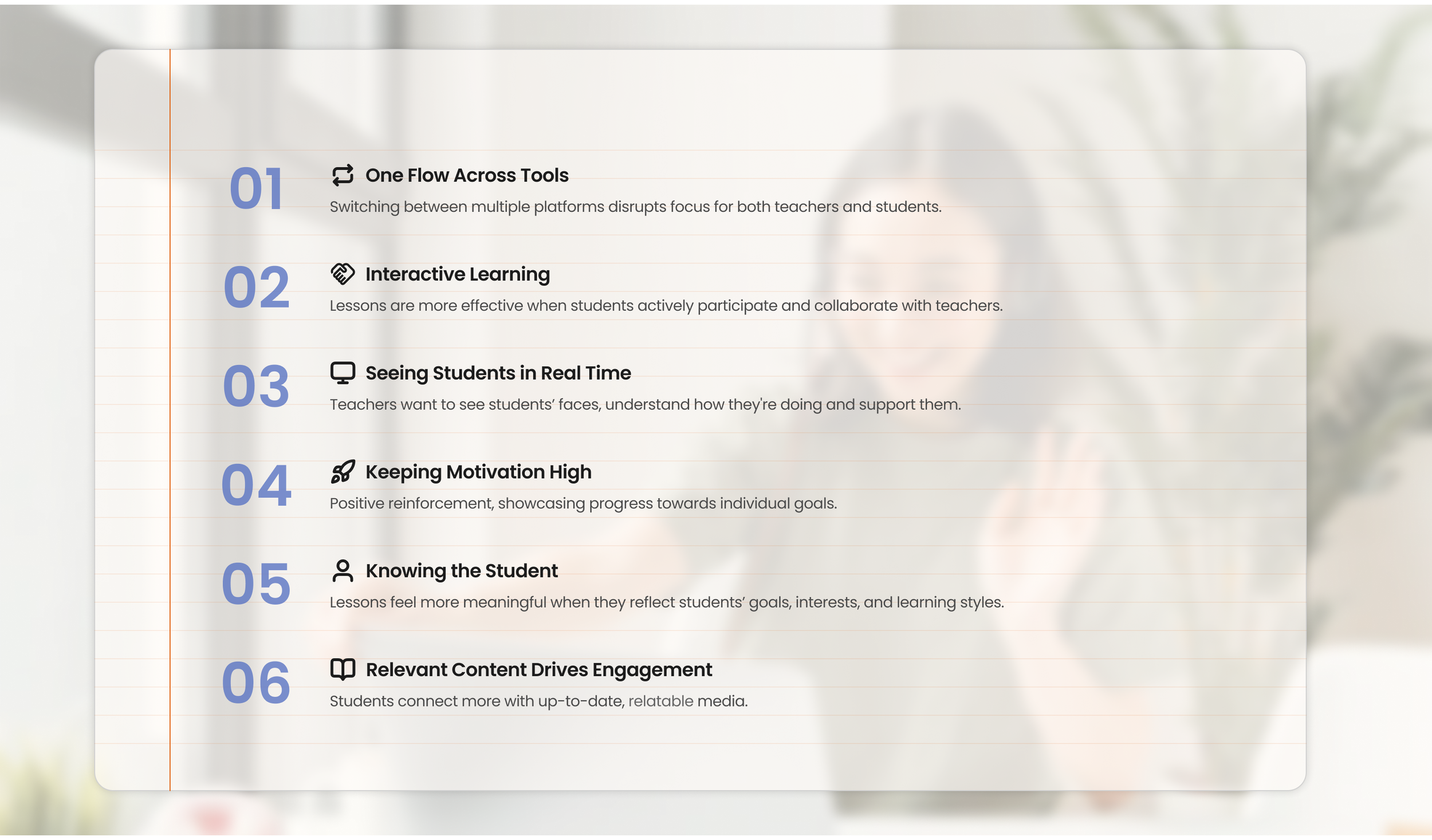
In-depth interviews with English teachers and students, including those from Learn to Learn, revealed the core barriers disrupting their remote lessons. One clear pattern emerged: both groups ultimately want the exact same things.
Alongside the interviews, live session observations captured the real-time dynamics of interactive teaching. These practical insights directly mirrored the workflow friction already present in Learn to Learn’s platform.
Key Insights
The Solution
From Learn to Learn to BeLingual
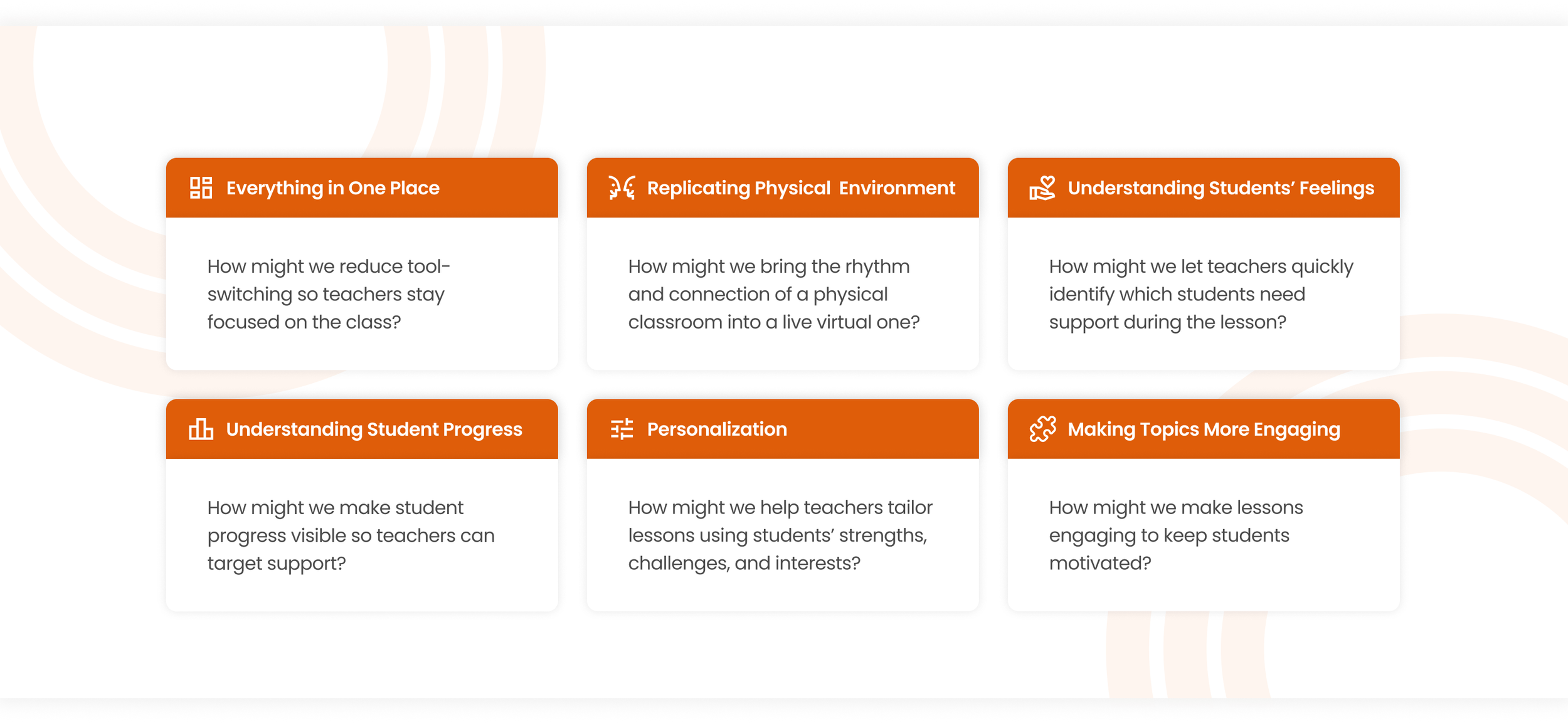
Everything in One Place
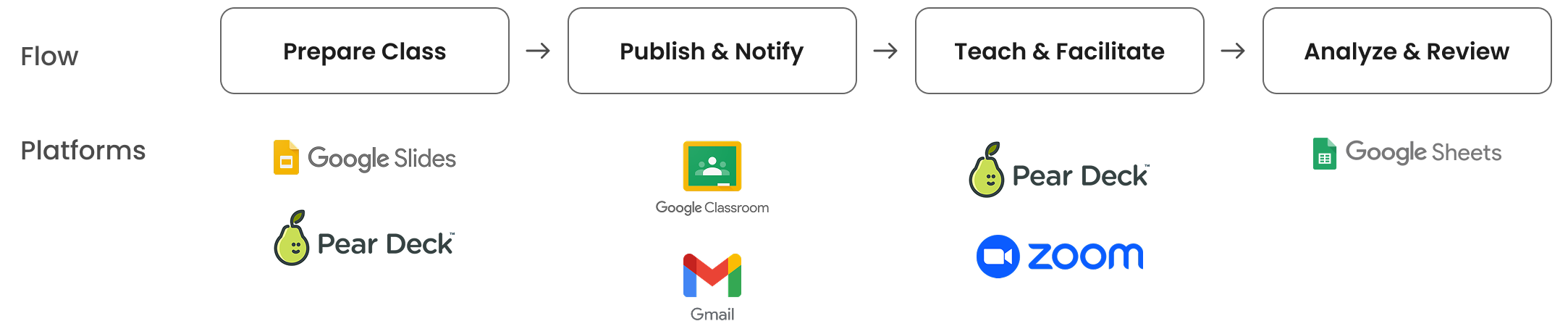
Teaching wasn’t just fragmented during the live lesson, the entire lifecycle of a class, including preparation, publishing, teaching, and review, was spread across multiple tools, increasing workflow friction for teachers and forcing students to juggle several platforms.
How things worked before:
After (BeLingual):
BeLingual was designed to collapse this fragmented flow into a single teaching and learning surface.
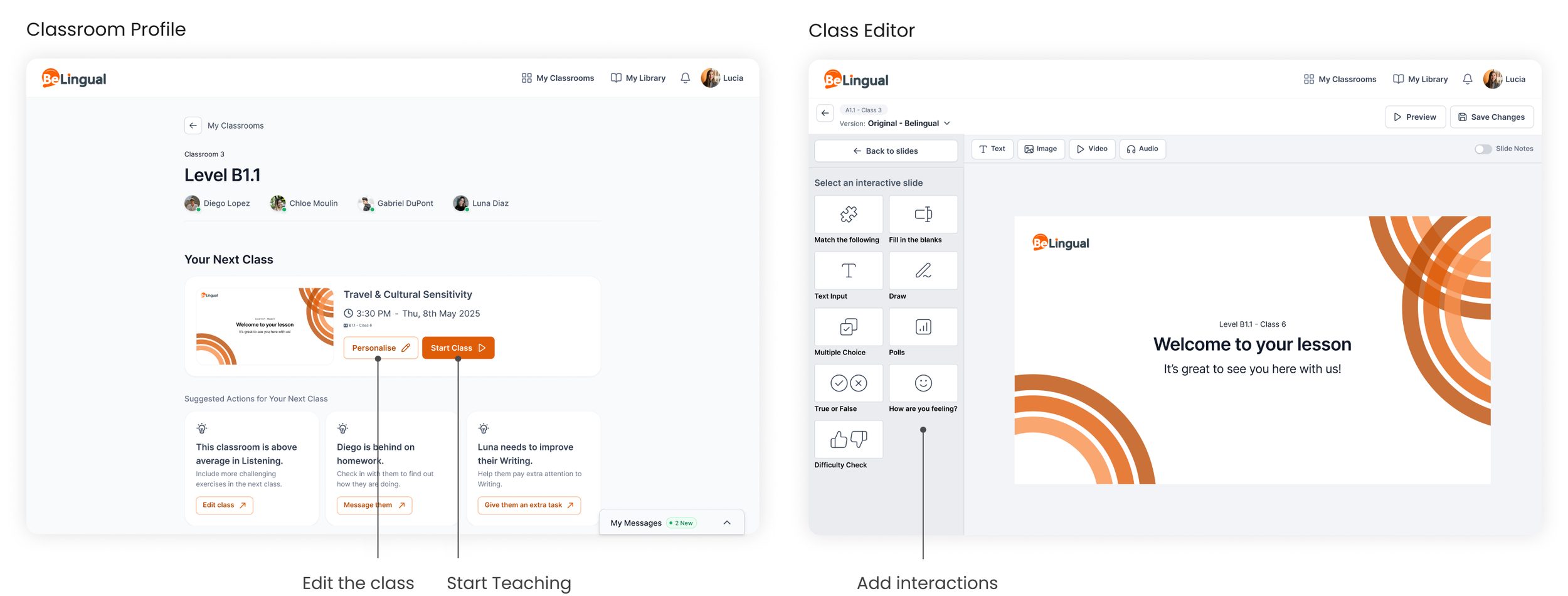
Replicating the Physical Environment
In traditional online lessons, multiple windows and tools broke the natural flow of interaction and made it hard for teachers to see students. Embedding Zoom into the platform kept students’ faces visible alongside lesson content, maintaining eye contact, collaboration, and classroom rhythm.
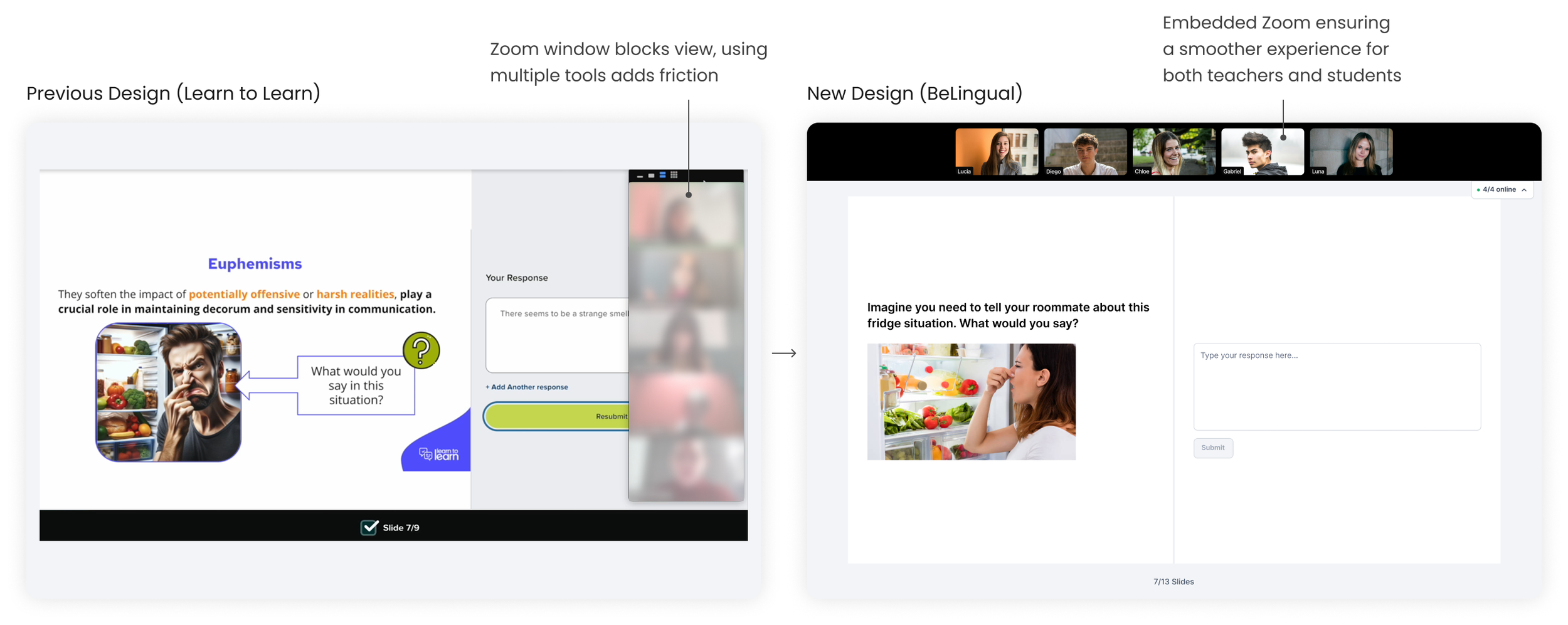
Understanding Students’ Feelings
In online classes, teachers often lack real-time awareness of how students are coping with the material. The existing emotional check-in felt vague and difficult to act on, offering little clarity for teachers. Redesigning this interaction into clear, actionable signals gives teachers instant clarity, enables responsive teaching, and helps them support students in the moment while maintaining classroom connection.
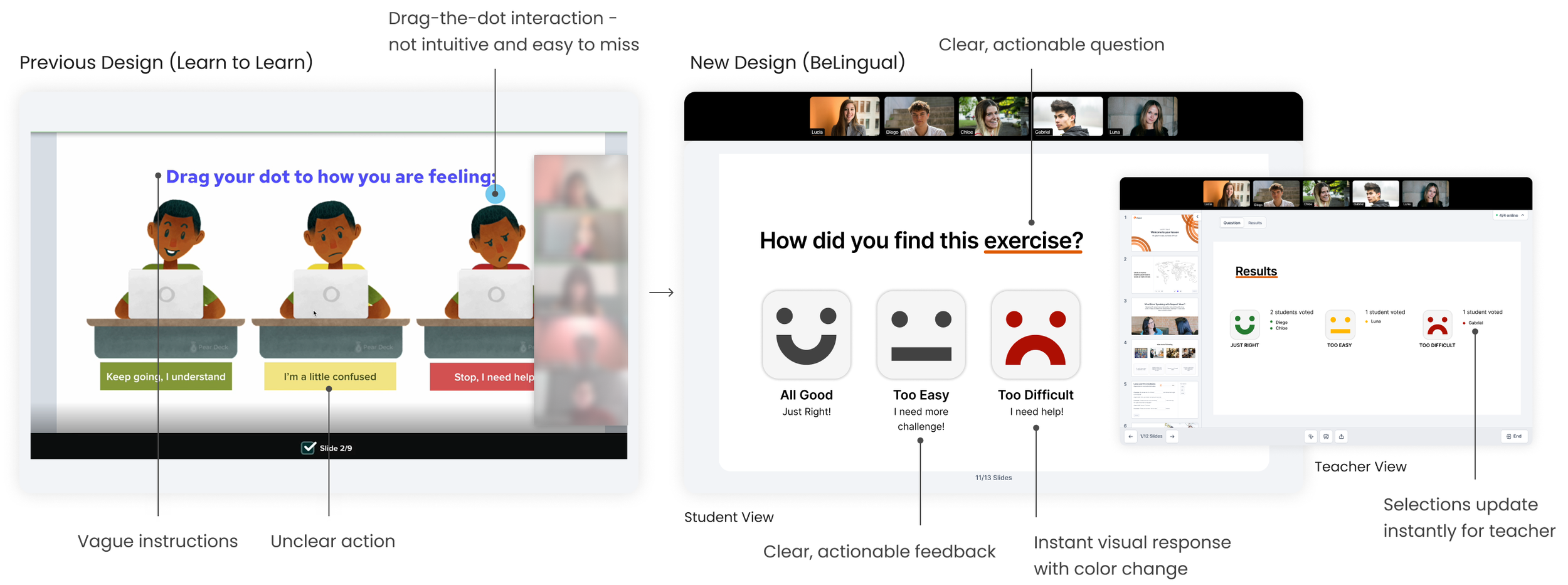
Understanding Student Progress
Teachers often lack a clear view of how students are developing over time. Tracking progress across classes makes learning patterns visible, helping teachers spot who may be falling behind and adjust support before gaps widen. A visual progress view within the student profile tracks skills over time, giving teachers immediate clarity.
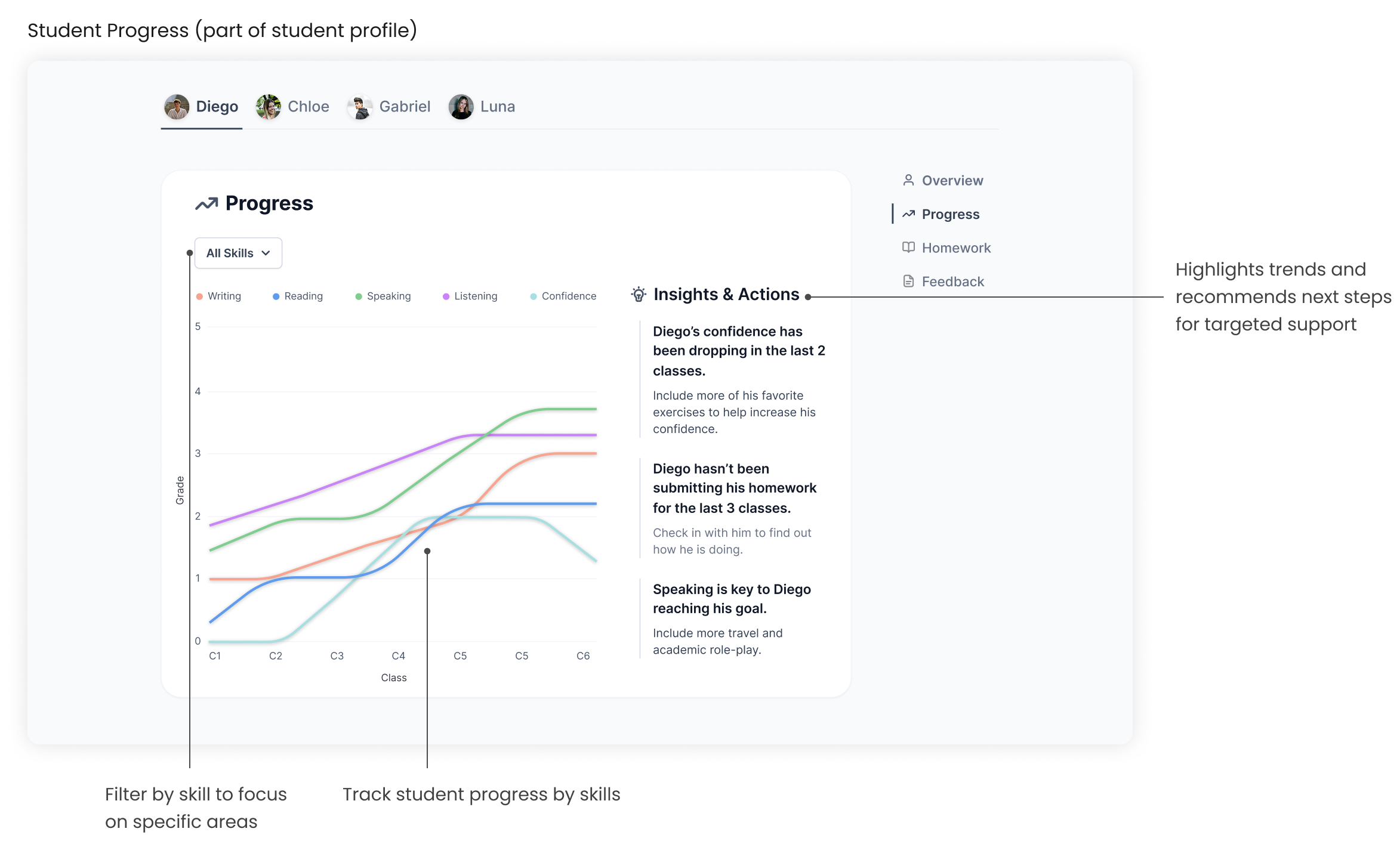
Personalization
A lack of visibility into each student’s goals, interests, and learning style makes tailoring lessons difficult. Personalization tools surface this information and suggest ways to adapt content, helping teachers target support and increase engagement, and meet students’ individual needs.
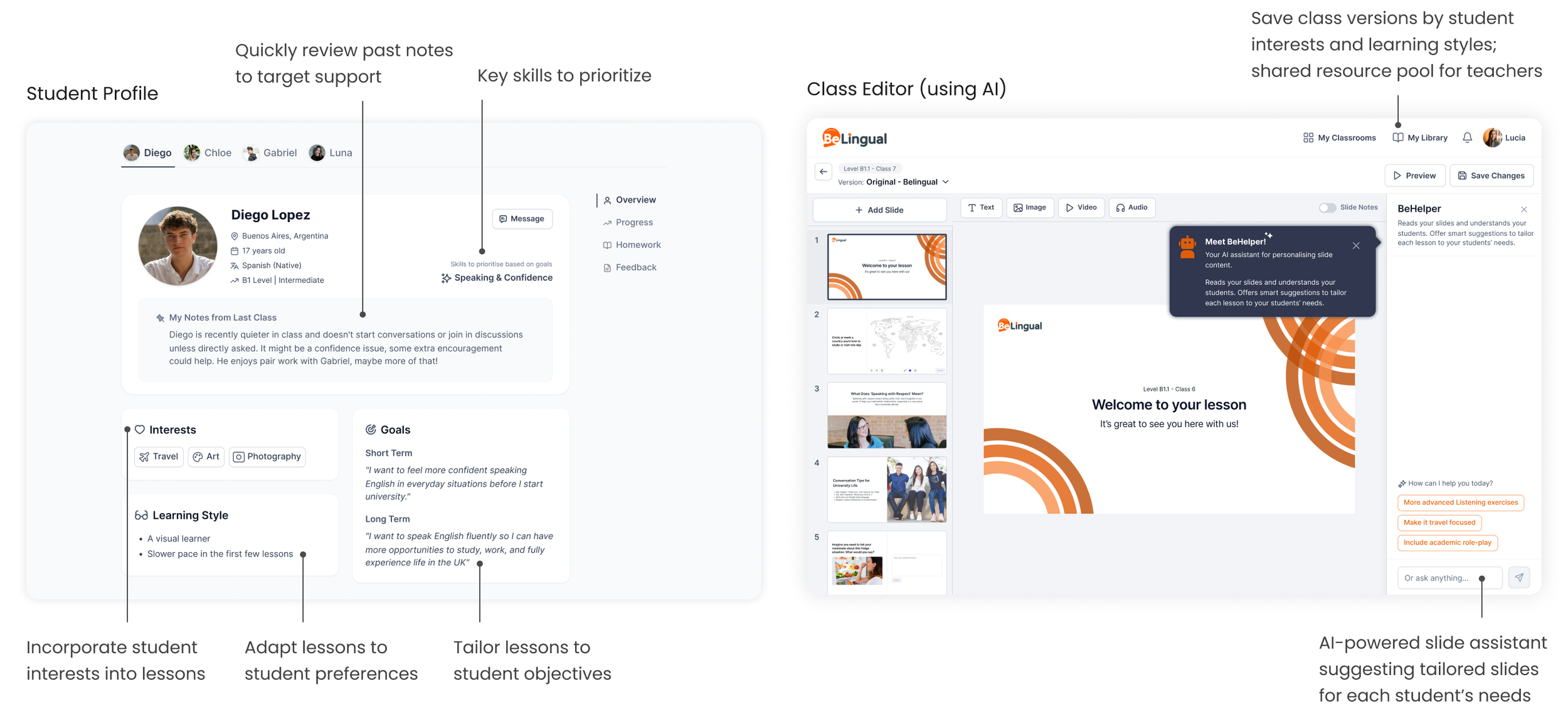
Making Topics More Engaging
Teachers often struggle to keep students engaged, and static content can leave some students behind. Interactive and visual tools keep students involved, make concepts clearer, and maintain motivation. Features like quizzes and polls provide immediate engagement and help teachers gauge understanding in real time.
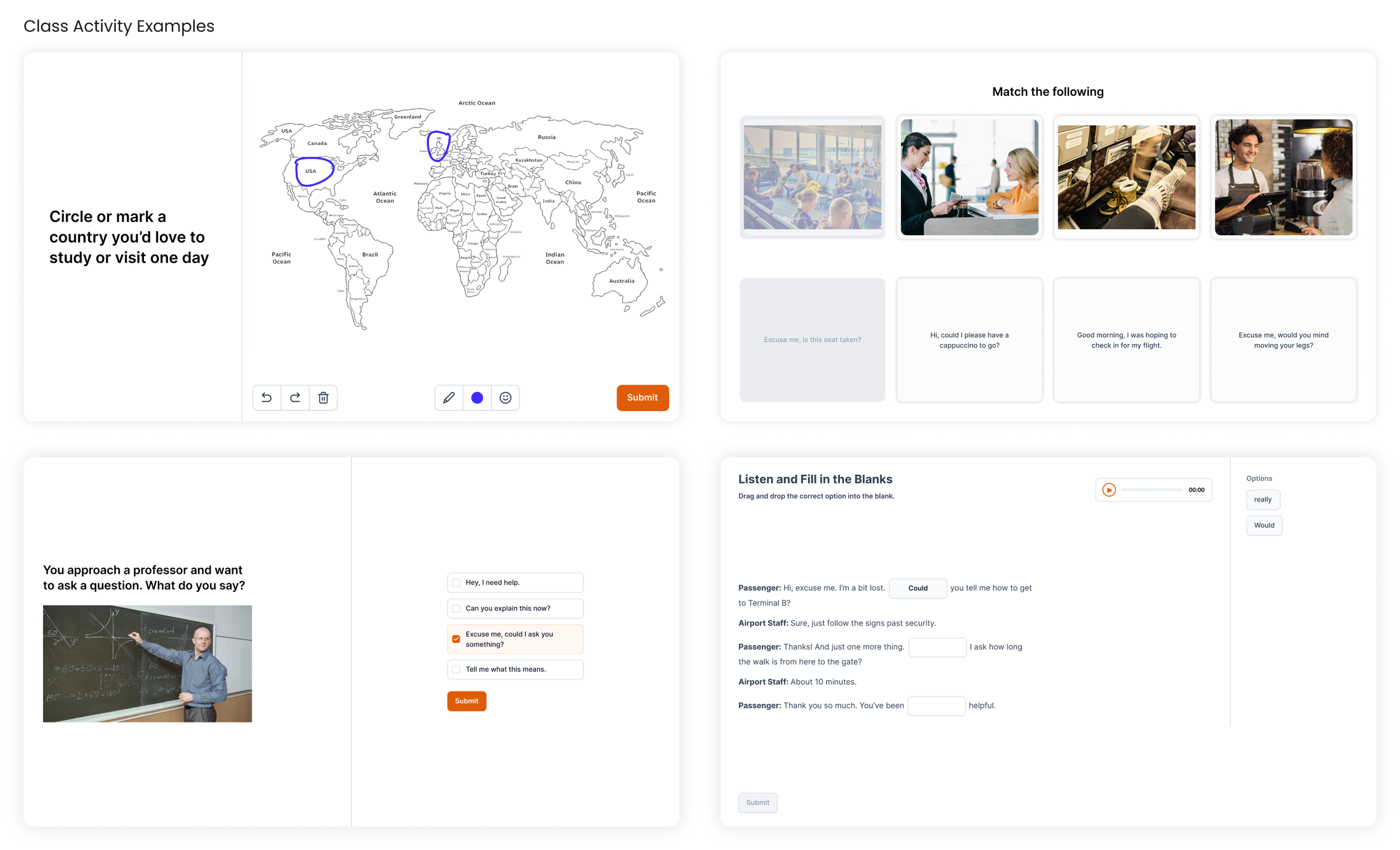
Classroom Flow
Prepare the Class
Live Class
Measuring Success
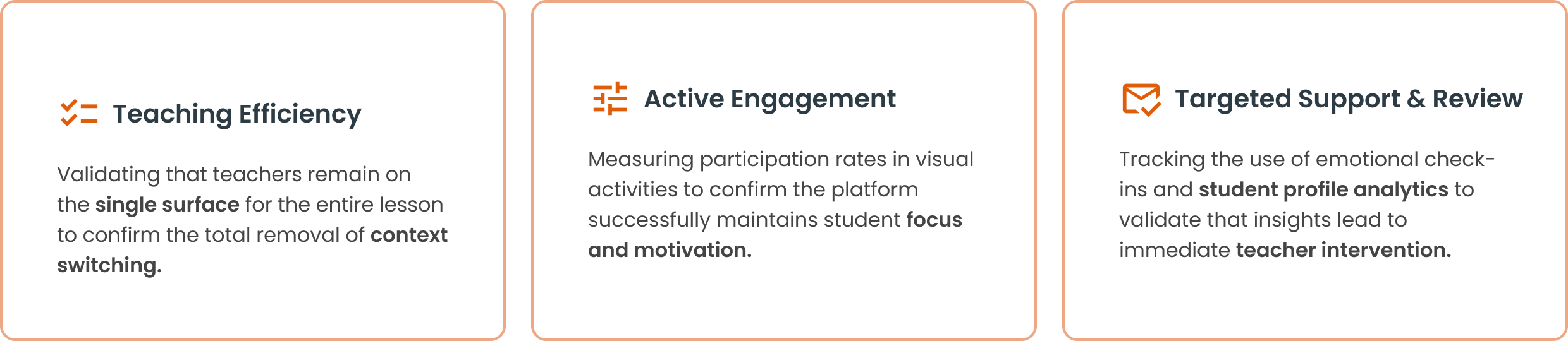
Breaking the cycle of fragmented teaching
Designing the BeLingual experience demonstrated that eliminating multiple tools is the key to maintaining classroom rhythm. To measure the real-world impact of this unified strategy, these steps would focus on three core areas: