
A Safe Place to Share
Well-Being at Work
B2B | Web Platform


Client: Elevate 4 | London, UK
Industry: Workplace Well-being / HR Tech
My Role: UX/UI Design
Year: 2025
Overview
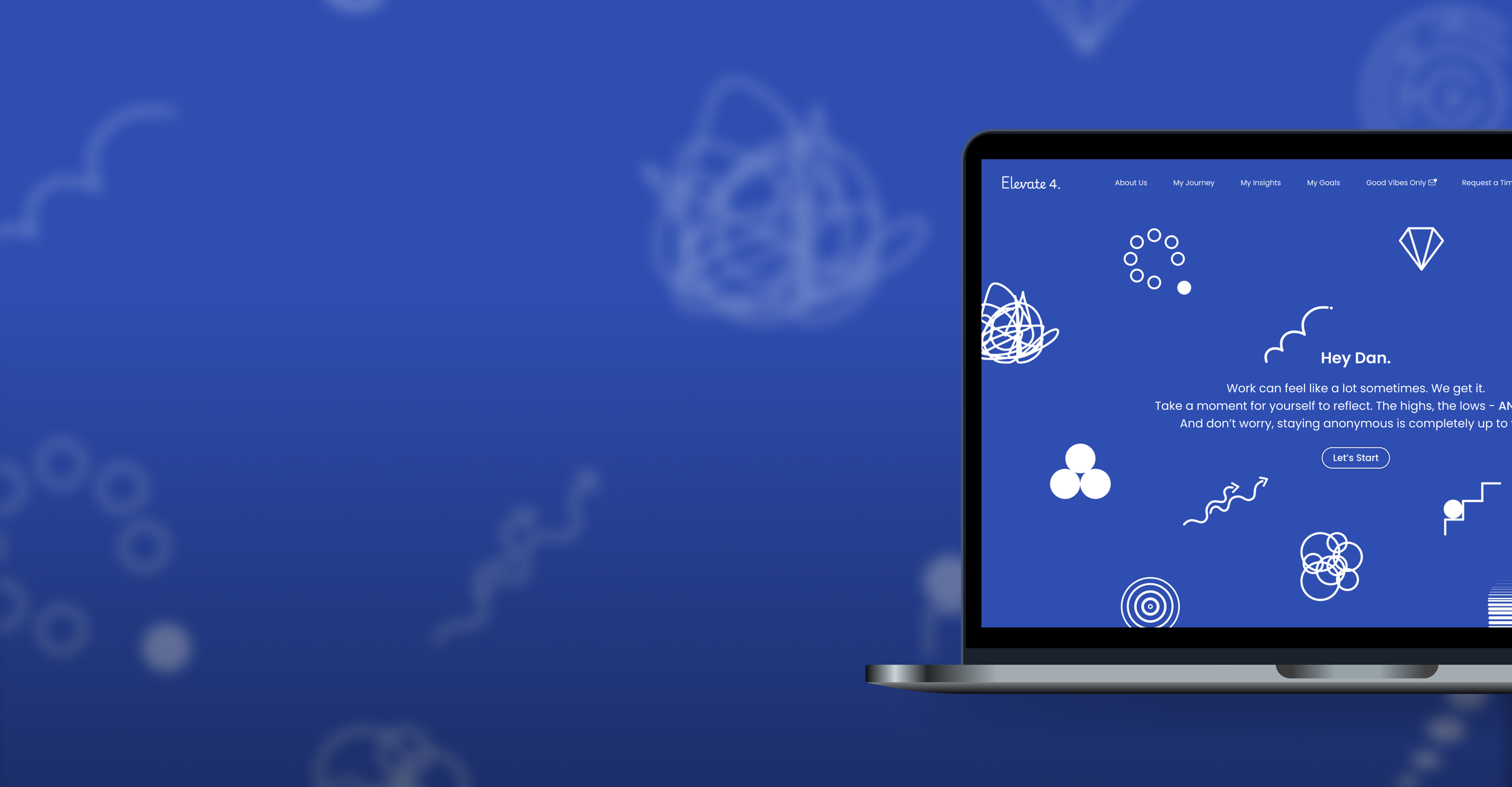
Elevate 4 is a workplace well-being platform that helps employees reflect on their emotions and experiences, while enabling organizations to surface meaningful patterns related to engagement and well-being. Its goal is to make emotional reflection intuitive and engaging, so employees can pause, understand how they feel, and express it naturally, while providing employers with actionable insights to support their teams.
The Problem
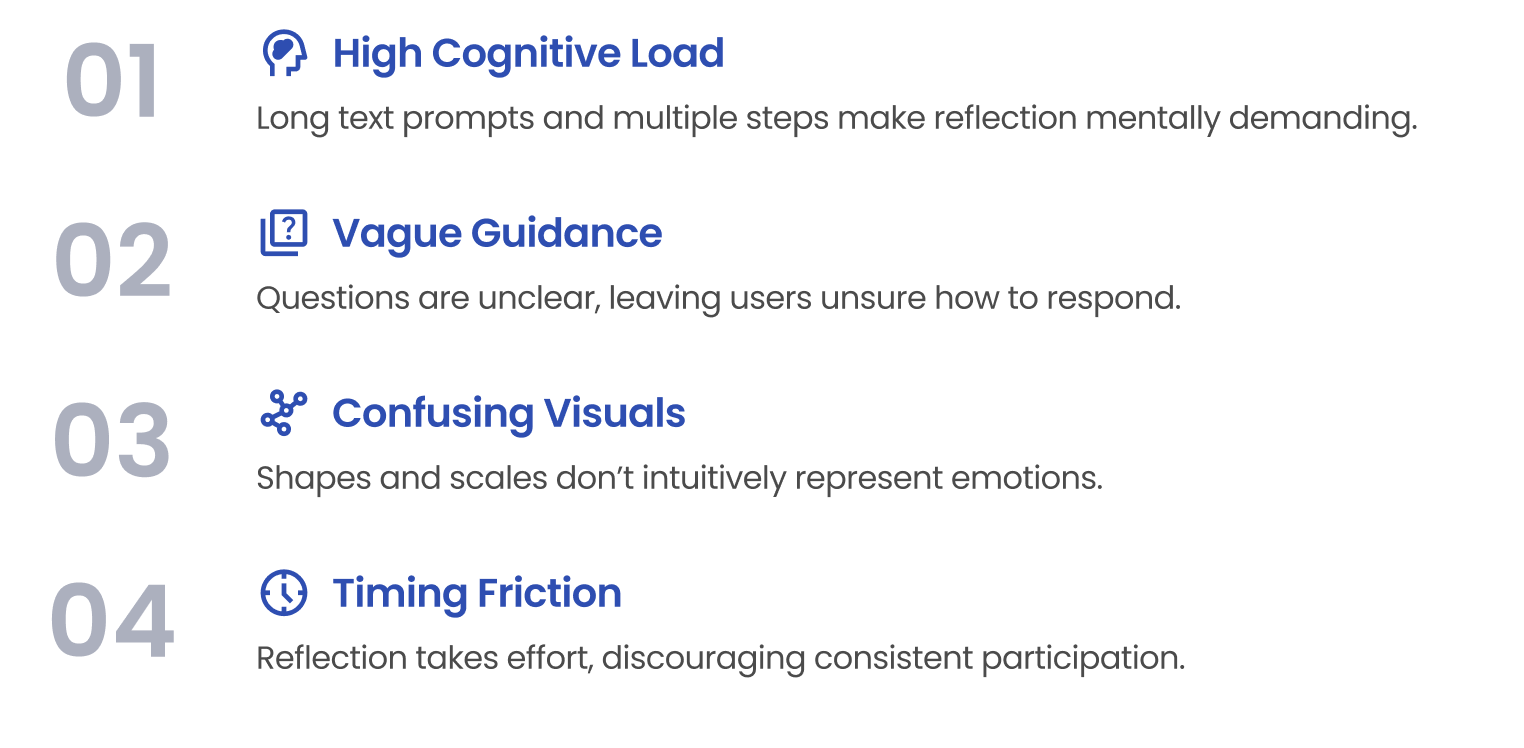
The current experience of reflecting on emotions is not intuitive or engaging, making it difficult for employees to consistently express how they feel.

Challenges in the Current Experience
Who are the Top Competitors

Key Observations


Text-Heavy Reflection
Competitors like 15Five, Unmind, and Culture Amp primarily use text-based surveys and prompts to capture employee reflections.
Abstract & Effortful Experiences
Users may find the reflection process mentally demanding ordisengaging, especially during busy workdays.
Opportunities

Visual & Emotive Inputs
Allow moods or abstract visuals to make reflection more intuitive.

Gamified Journey
Make the experience engaging
and motivating instead of just completing surveys.
Elevate 4 is currently in development, and screens of the existing version cannot be shared. Below are my design solutions informed by user testing and research.
Solving the Problem
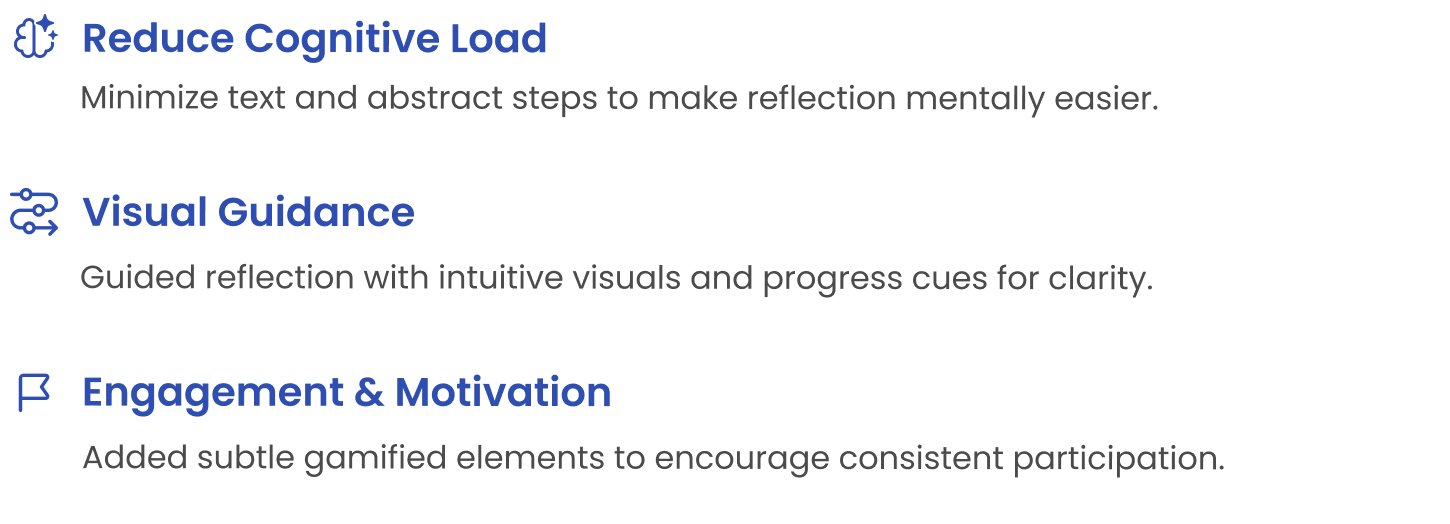
Design Approach
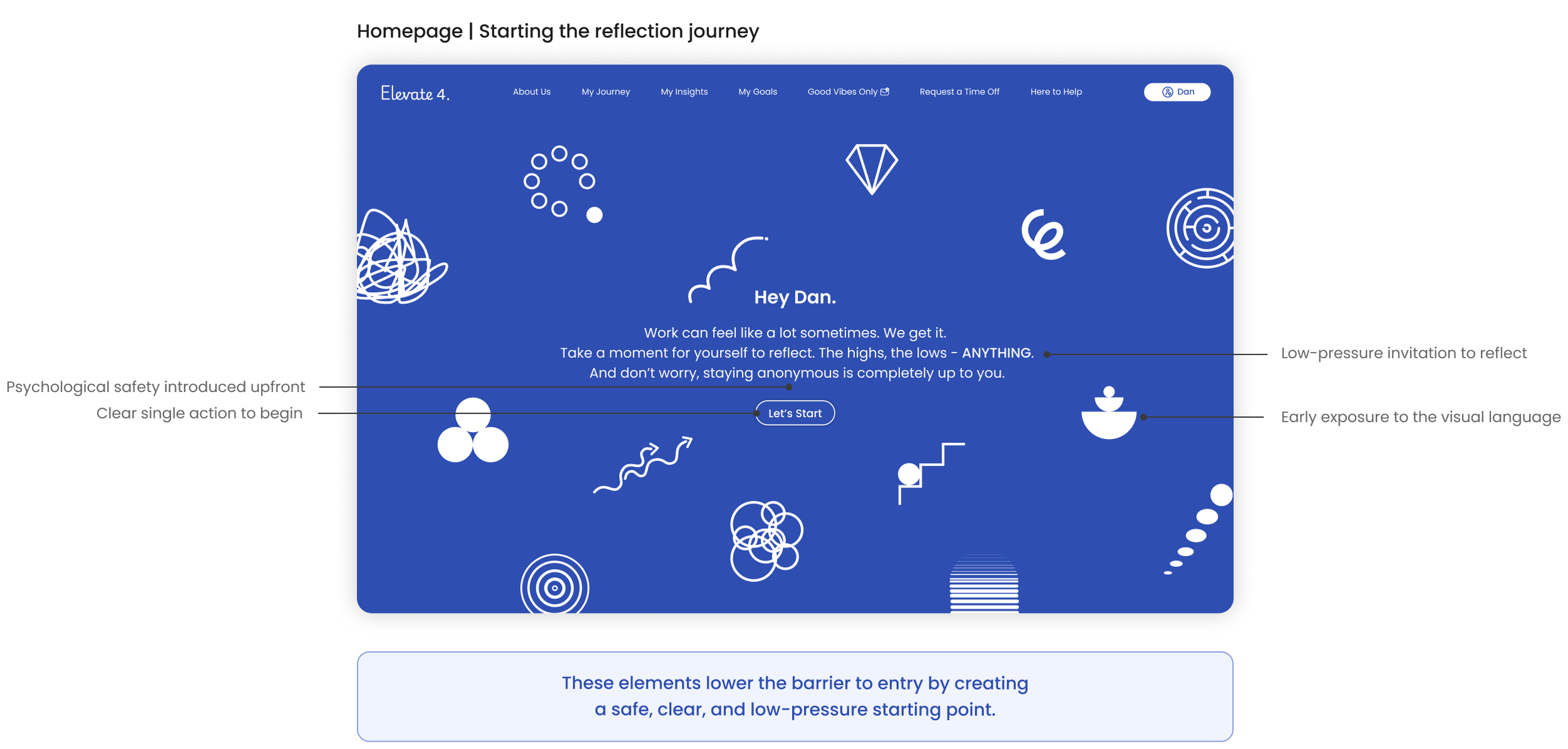
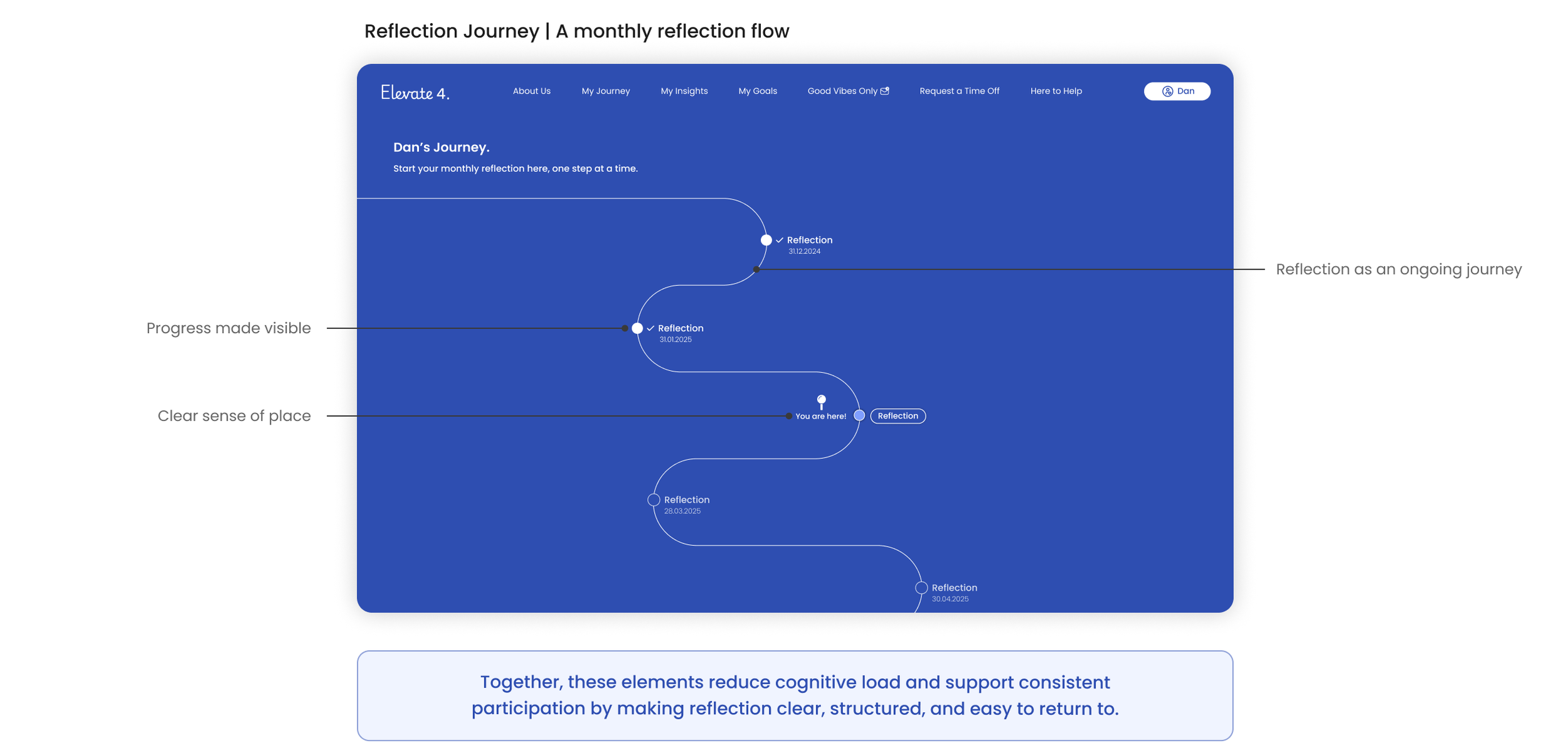
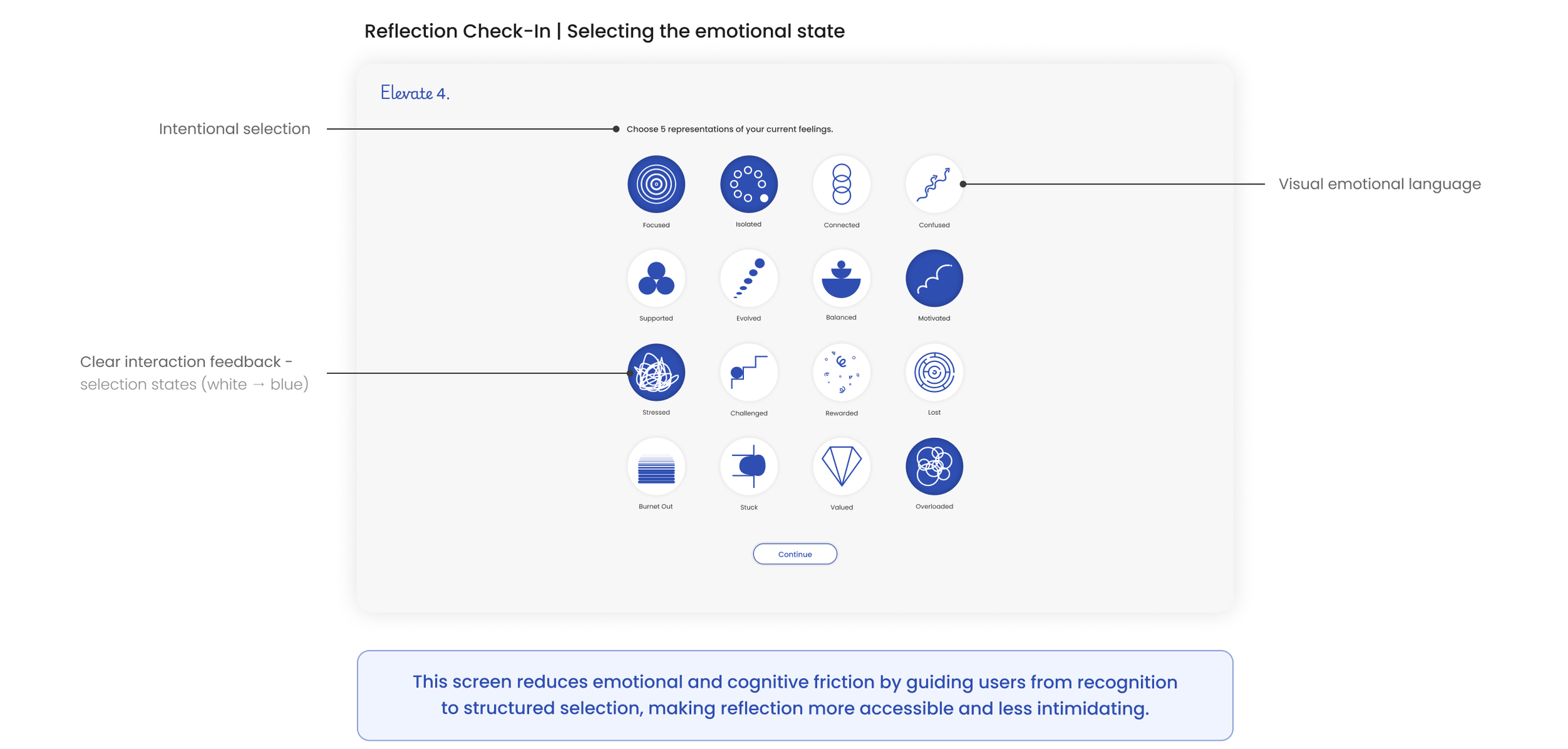
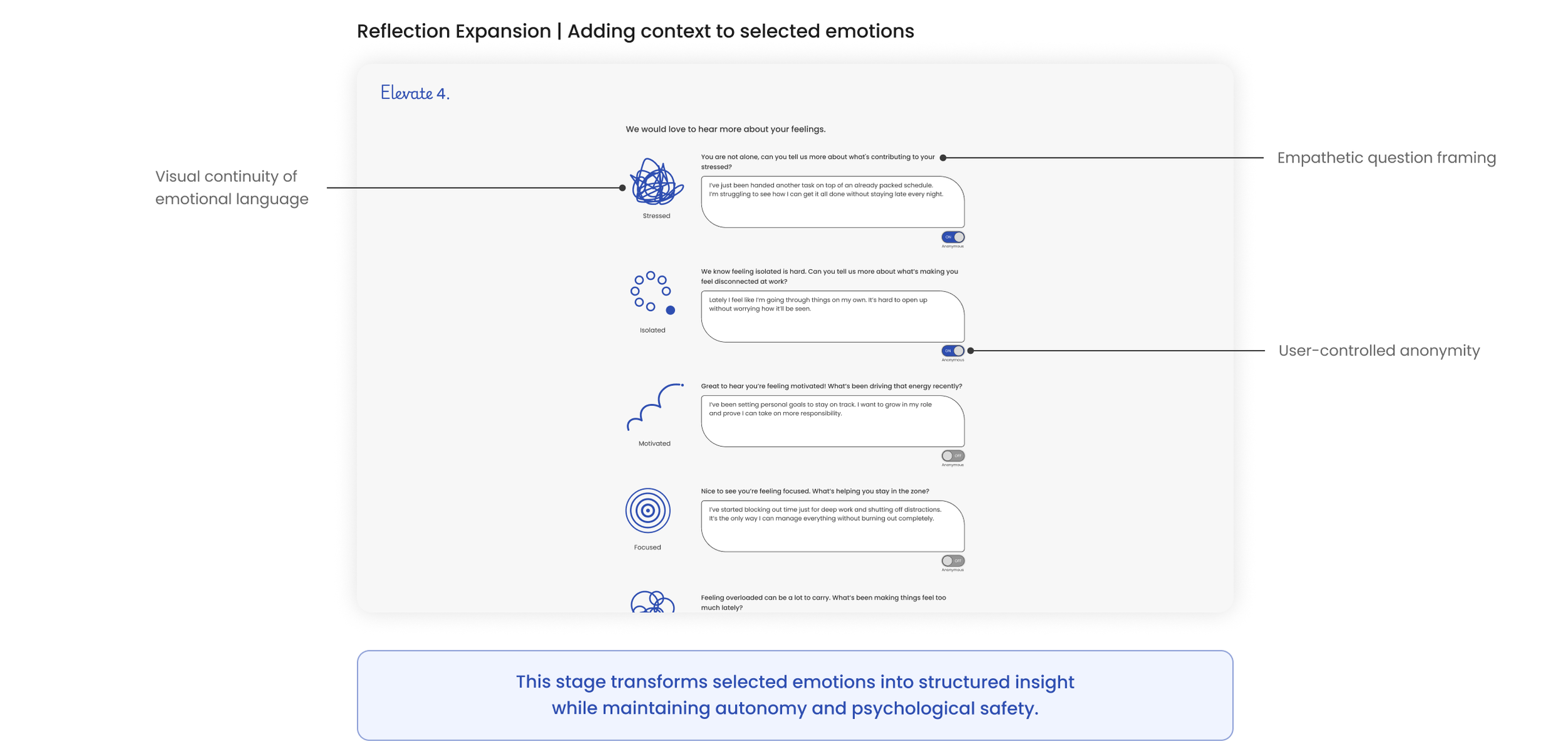
Reflection Flow
Conclusion
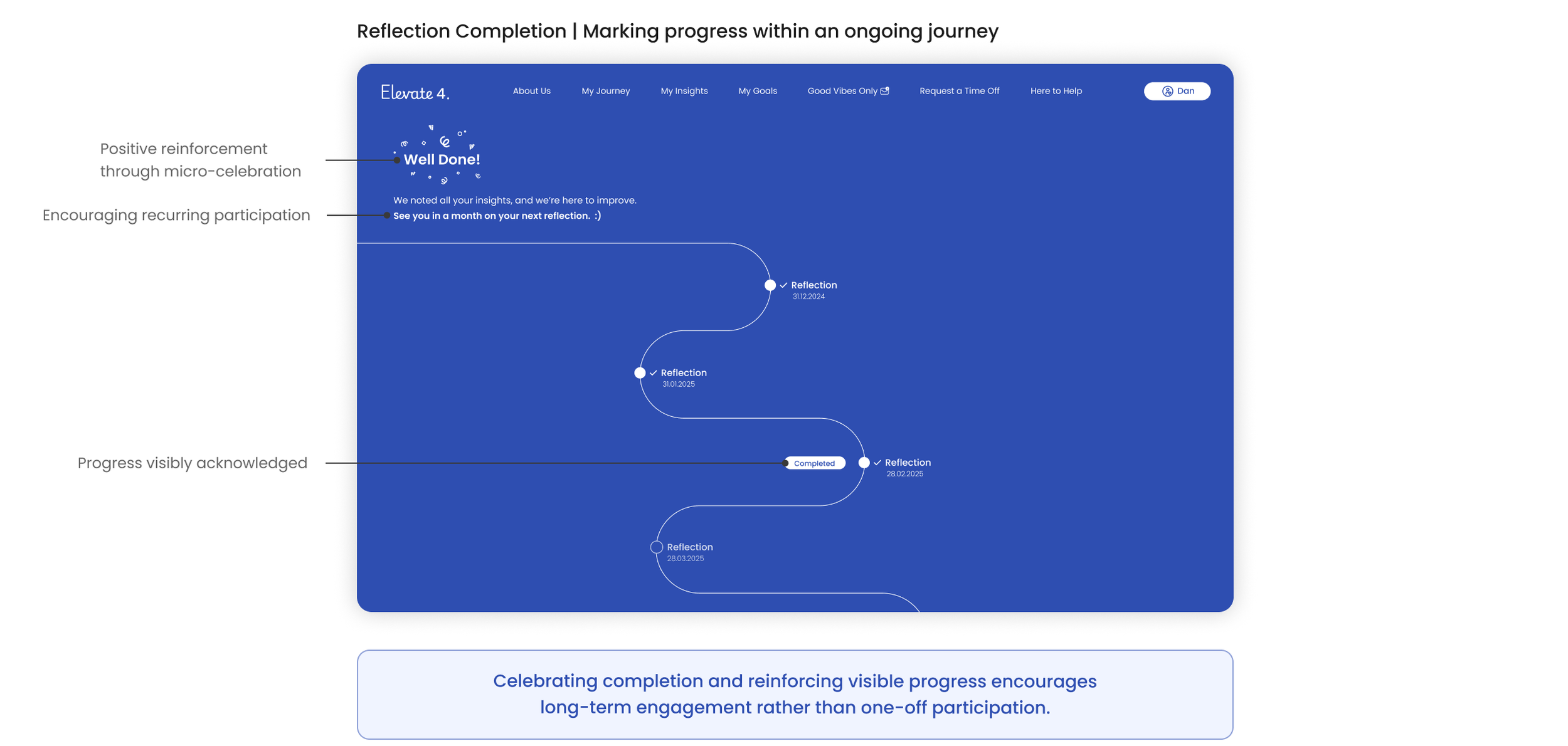
Elevate 4 reimagines workplace reflection as a structured, emotionally safe system rather than a one-off survey. By reducing friction, introducing visual emotional language, and reinforcing progress through clear milestones, the experience supports intentional participation and long-term engagement.
Throughout the process, I learned how small design decisions, tone of voice, interaction feedback, and visible progress, directly shape psychological safety and user confidence.
This project strengthened my approach to designing not just interfaces, but behavior-driven experiences that encourage consistency, autonomy, and meaningful reflection over time.