
A Safe Place to Share
Well-Being at Work
B2B SaaS | Web Platform
Client: Reflect | London, UK
Industry: HR-Tech / Workplace Well-being
My Role: UX/UI Design
Year: 2025
Overview
Transforming emotional check-ins into meaningful insights
REFLECT is a workplace well-being platform. Its mission is to create a secure and engaging environment that turns monthlycheck-ins into an intuitive habit. This allows employees to express how they feel while surfacing the insights required to foster a supportive work culture.
My role was to reimagine the core product vision. I designed a visual-first platform that combines low-friction emotional mapping with rigorous user privacy. This empowers employees to share honestly and gives organizations the data needed to take action.
The Problem
Employees need a safe, low-effort space to share how they feel at work, but the platform's heavy, unintuitive process creates a high cognitive load that reduces consistent engagement.
Challenges in the Current Experience
Heavy, unintuitive process discouraging participation
Heavy explanations and complex steps make the reflection mentally demanding.
01
High Cognitive Load

Broad questions paired with dense text leave users unsure how to respond.
02
Vague Guidance

Geometric shapes and sliding scales fail to intuitively represent human emotions.
03
Confusing Visuals

An excessive time commitment for a weekly reflection heavily discourages consistent use.
04
Timing Friction

User Research & Insights
The psychological barriers to honest reflection
Exploring how employees manage workplace stress and communication revealed three core realities:
Psychological Safety
Employees worry that honest feedback might negatively impact their professional standing or affect relationships with managers and peers.

Variable Trust Levels
Comfort sharing depends on interpersonal dynamics. Without guaranteed confidentiality, employees default to managing stress alone to protect their privacy.

The Exhaustion Barrier
Employees are already overwhelmed by tasks in their core workload. They simply lack the mental bandwidth to stop and process their emotions during the workday.
Competitive Analysis
Breaking the cycle of survey fatigue

Key Observations
Text-Heavy Reflection

Competitors rely entirely on dense survey matrices and mandatory text fields, creating a high cognitive load.
Effortful Experiences

Traditional check-ins can feel mentally demanding and disengaging for users during busy workdays.
Opportunities


Visual & Emotive Inputs
Replace long textual descriptions with intuitive, visual-first inputs to speed up the reflection process.
Intuitive Habit-Building
Create a fluid flow that motivates consistent check-ins without feeling like a chore.

The Design Approach
From heavy process to intuitive habit
To transform emotional check-ins from a draining administrative chore into a low-pressure habit, I grounded the design strategy in three core principles:
The Solution
Designing a low-pressure flow for honest reflection
The existing platform is currently under active development, so original screens cannot be shared. The following proposed solutions are driven entirely by user research and identified market gaps.
Designing a frictionless and low-pressure entry so users can begin their reflection without hesitation.
Overcome the Exhaustion Barrier
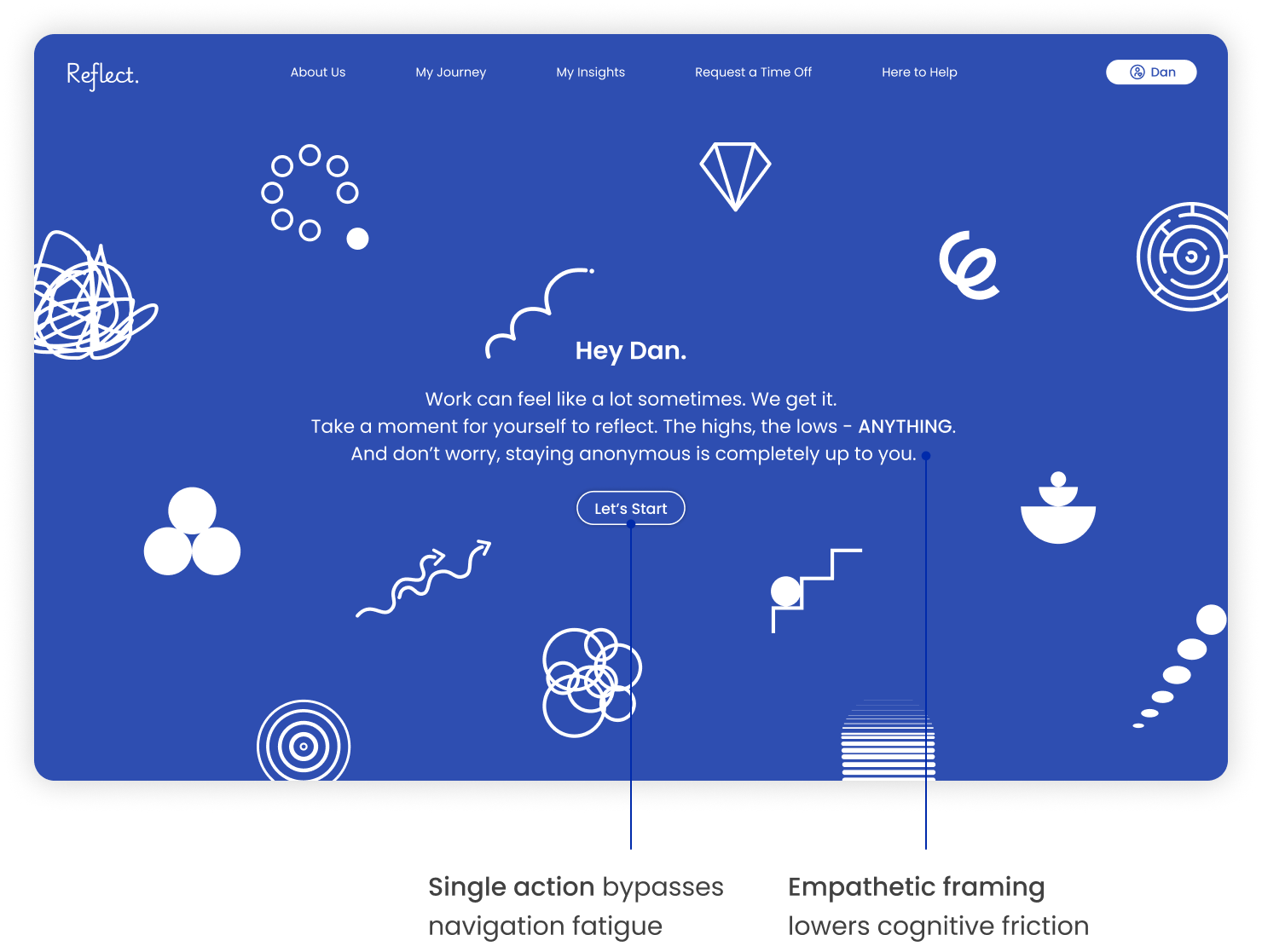
Homepage | Starting the reflection journey
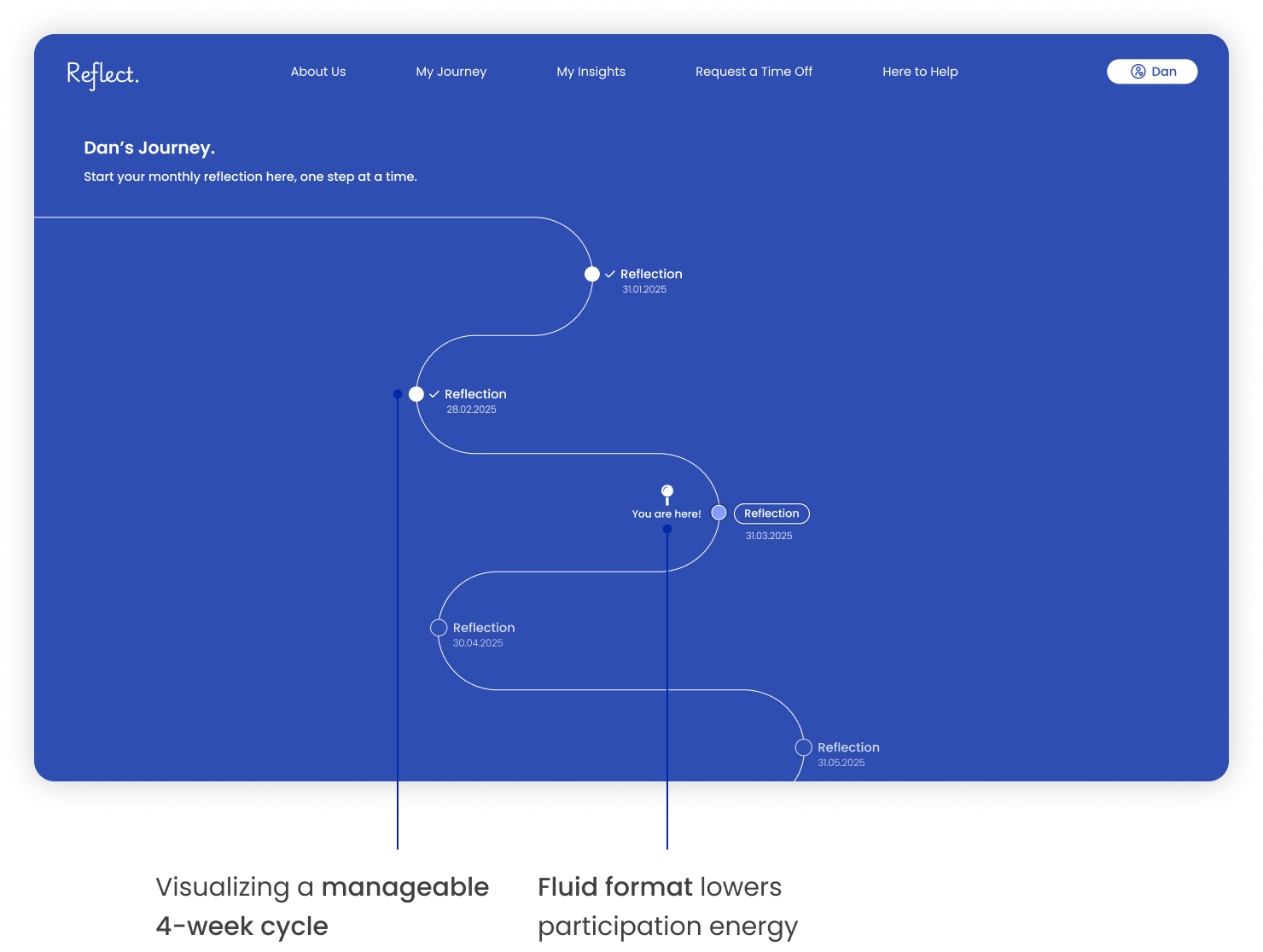
Reflection Journey | A monthly reflection flow
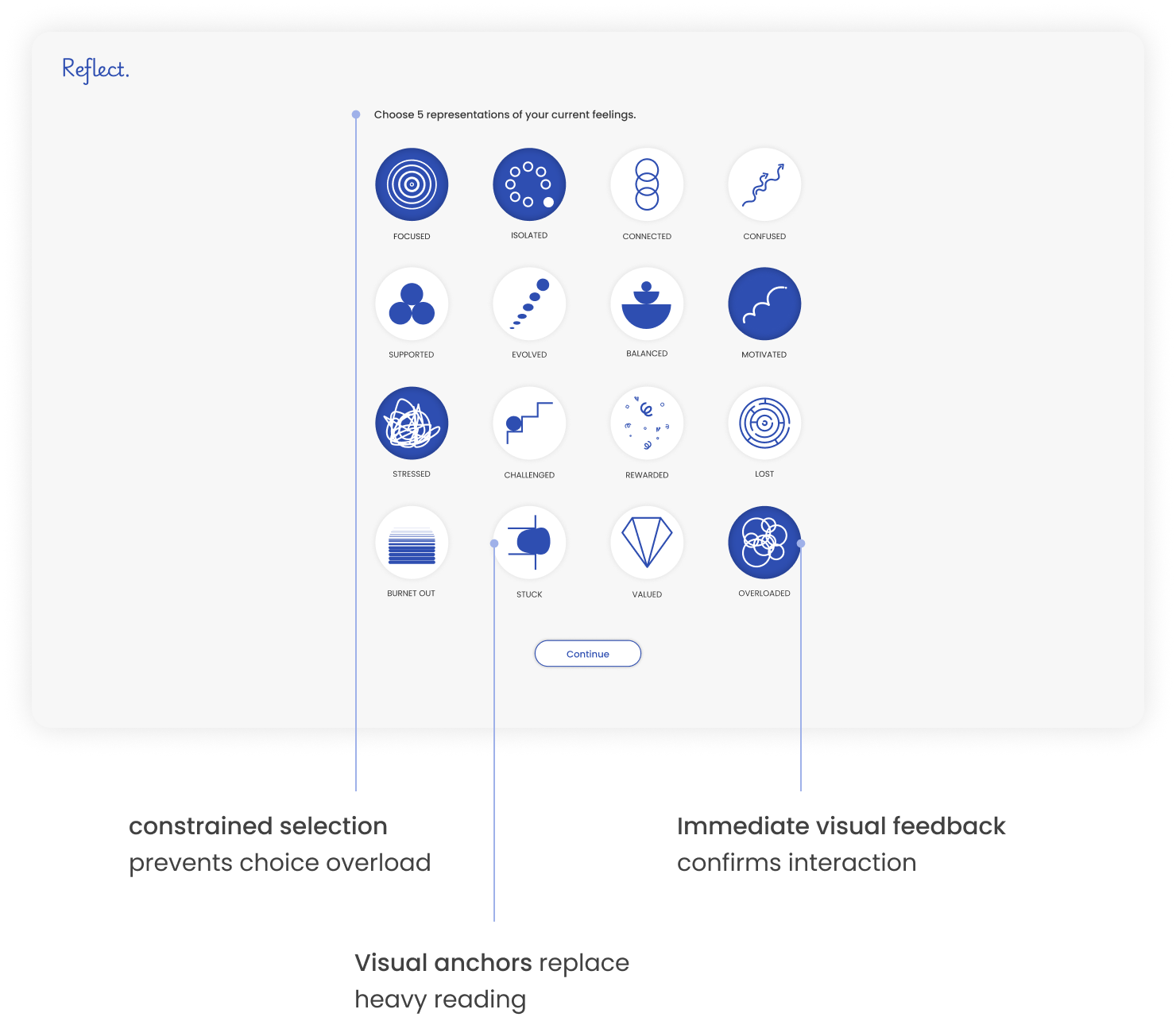
Replacing dense survey matrices with visual inputs to reduce cognitive friction and make reflection less intimidating.
Reduce Cognitive Load
Reflection Check-In | Selecting the emotional states
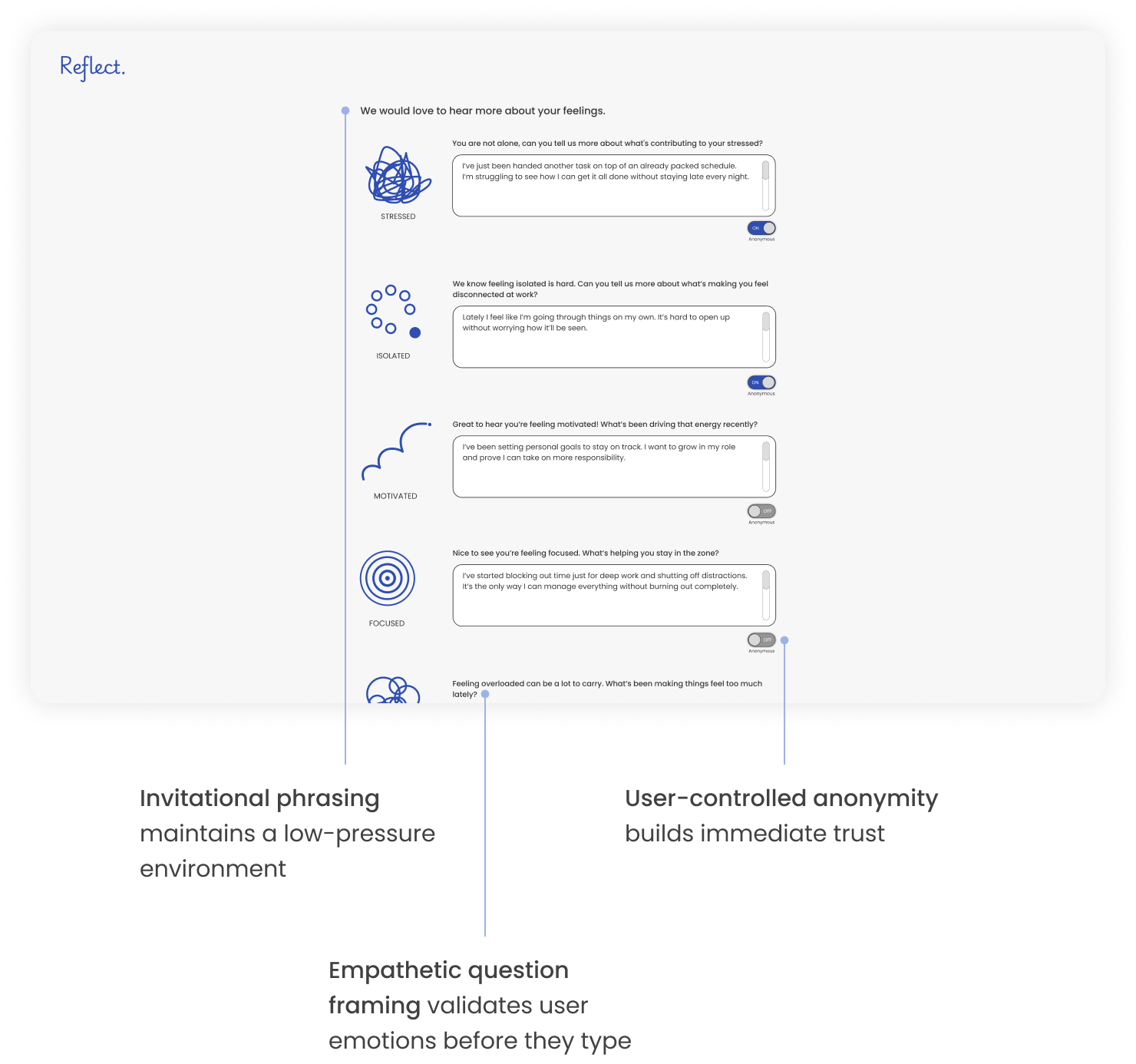
Providing explicit privacy controls and empathetic prompts to ensure a low-pressure environment for honest reflection.
Ensure Psychological Safety
Reflection Expansion | Adding context to selected emotions
The Value
Close the Loop: From Input to Insights
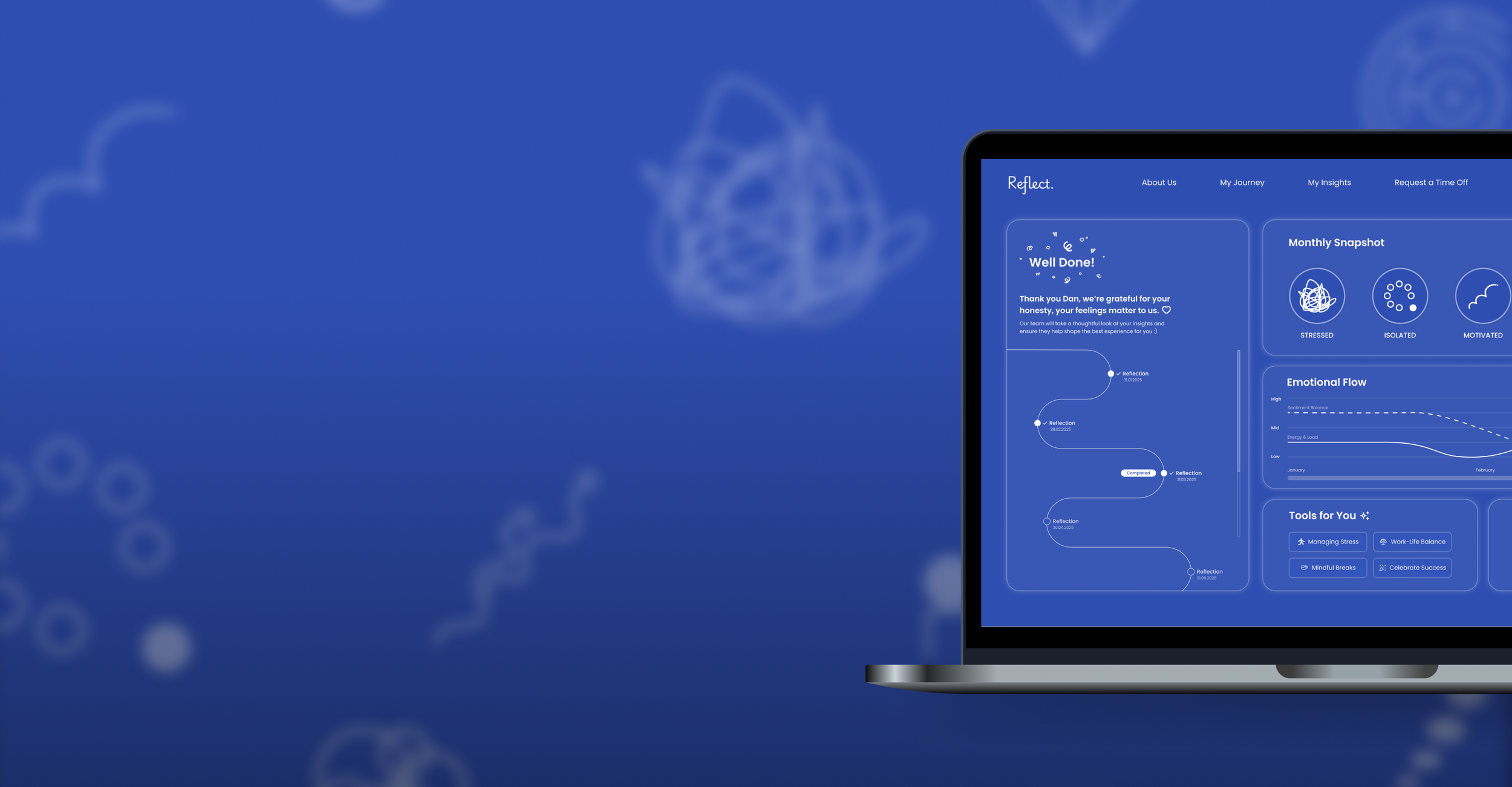
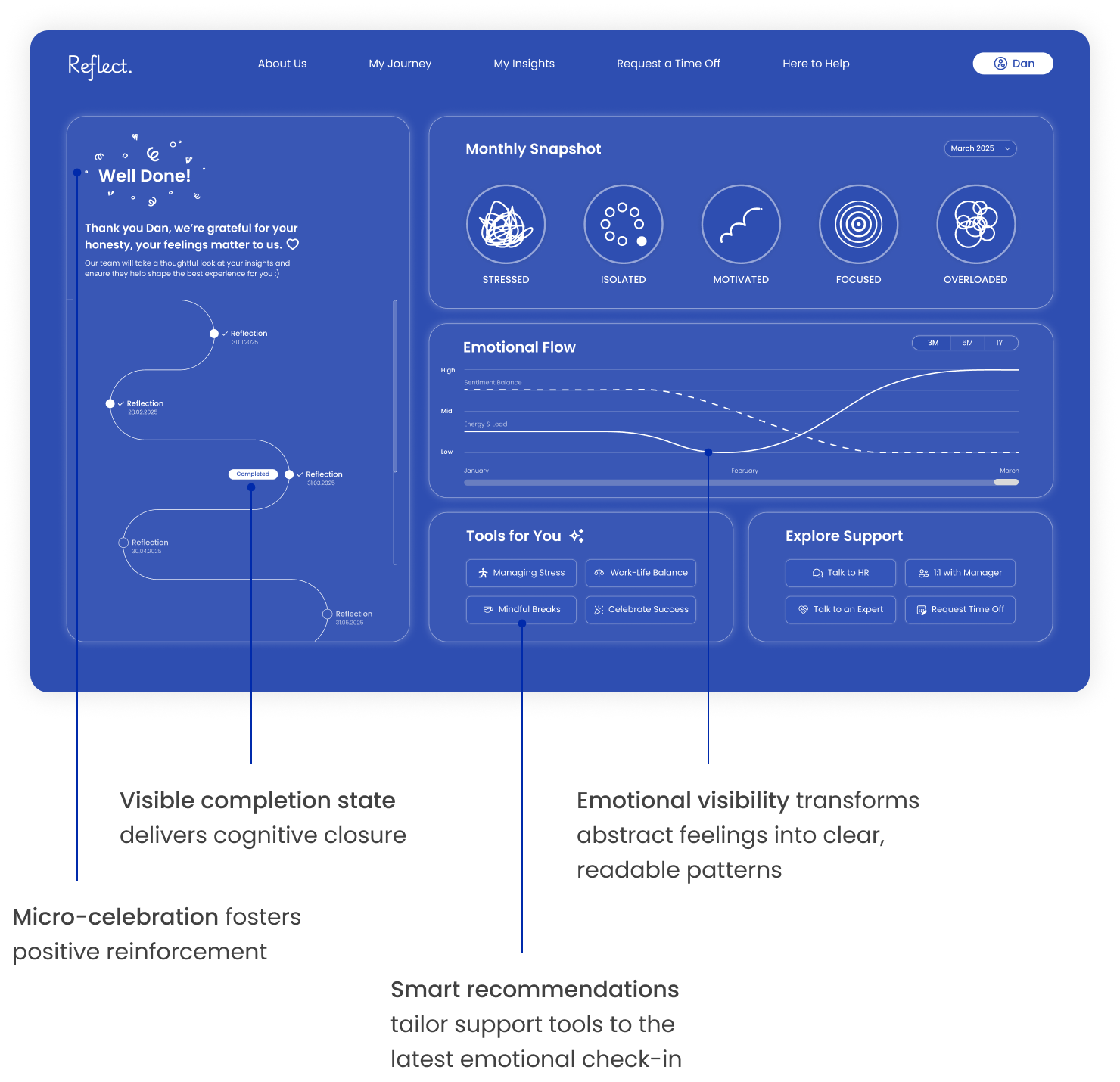
To build trust, employees must see the value of their participation. The dashboard provides immediate visibility into their emotional trends and offers actionable support tools tailored to their needs through AI-driven recommendations.
Insights Dashboard | Visualizing progress and personalized support
Reflect Walkthrough
Measuring Success
Validating a low-friction, high-value experience
Designing the 'Reflect' experience demonstrated that minimizing cognitive friction and delivering immediate value are the keys to overcoming survey fatigue. To measure the real-world impact of this holistic strategy, these steps focus on four core areas: